

How to increase the utilization of Combo Ports to access more subscribers without affecting the network bandwidth rate is a worthy reference for Internet Service Providers and Telecom Operators and a way to reduce operating costs. In this article, we will discuss how to multiply the user access capacity of Combo Ports through new fiber splitters.
Status Of Utilization Of Combo Ports
With the development of fixed Gigabit services, XG-PON is gradually taking a leading role in broadband access networks. In order to share ODN with GPON, XG-PON usually adopts Combo Optical Module (commonly known as “Combo Port”). Whether the user uses GPON optical modem or XG-PON optical modem, it can be directly connected to the optical splitter in the fiber optic distribution box through the home optical cable to achieve service access.
In the existing network, ODN usually adopts two-stage splitting, and the total splitting ratio is 1:64, i.e., a Combo port can access up to 64 users, for example, when the first-stage splitter is 1×8, the second-stage splitter is 1×8, and each splitter box can be installed with up to 8 users. When the distribution box optical splitter port occupancy is full, it is necessary to add a new optical splitter in the distribution box to expand capacity.
If there are still spare ports in the first-stage optical splitter, it is necessary to add an ODN link from the distribution hub to the distribution box; if there are no spare ports in the first-stage optical splitter, it is necessary to add a new Combo port and an ODN link from the OLT to the splitter box, as shown in Fig. 1.
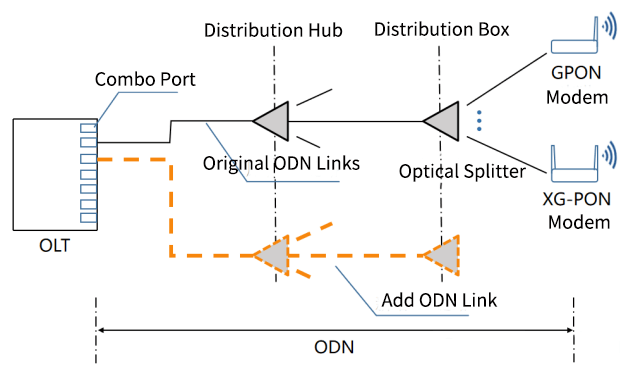
Fig. 1 Expansion of Existing ODN
Since the port utilization rate of the optical splitter at the distribution box is only about 50%, and the port utilization rate of the optical splitter at the distribution hub is only about 80%, the average number of subscribers actually put on a Combo port is less than 30.
The average number of subscribers installed in the PON ports of some areas of an operator is shown in Fig. 2 (the horizontal coordinates in the figure represent different provinces, and the province with the serial number of 1 indicates the average of each province).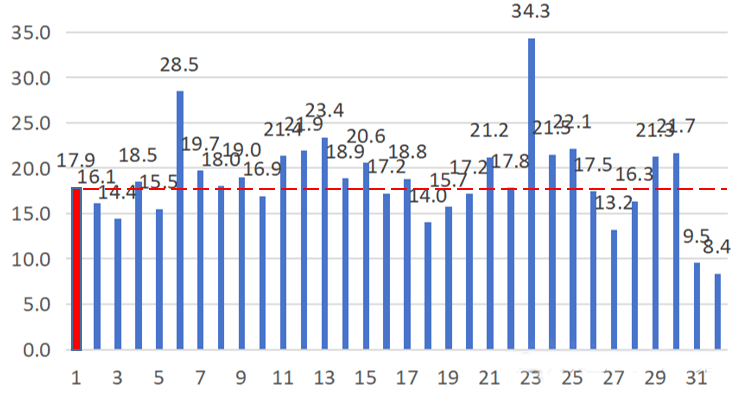
Fig. 2 Users per PON port
On the one hand, because the number of subscribers accessed by each PON port is too small, and on the other hand, the demand for bandwidth by subscribers is not that great, this leads to a very low bandwidth utilization rate of Combo ports. For example, as of June 2024, the maximum bandwidth utilization (in seconds, GPON channel or XG-PON channel) of more than 99.9% of Combo ports in a first-tier city is less than 10%. The resource utilization of Combo ports urgently needs to be improved.
Combo Port Resource Utilization Improvement Ideas
In the article “What is XGS-PON and how does XGS-PON coexist with GPON and XG-PON”, it describes how XG-PON coexists with GPON. As a rule, Combo just combines XG-PON and GPON into ODN, and the maximum number of users accessed by one Combo port should be the sum of XG-PON and GPON channels, why the number of users accessed by Combo is still only 64 instead of 128?
Let’s look at the principle of BOSA (Optical Send and Receive Assembly) of the optical module in the optical modem. As shown in Fig 3 for the XG-PON optical modem in the optical module of the BOSA.
Downstream direction, from the Combo downstream 1490nm and 1577nm wavelength optical signals, in the BOSA is filtered out of the 1490nm wavelength, so that the optical cat can only receive the XG-PON optical signals. optical module of the GPON optical modem is the same reason.

Fig. 3 BOSA Principle of XG-PON Optical Modem
Therefore, before the downstream optical signal reaches the optical modem, as long as the GPON and XG-PON channels are separated by a combiner and splitter, and accessed to the XG-PON optical modem and the GPON optical modem respectively, the number of subscribers accessed by the Combo port can be increased exponentially.
Components Of Capacity-multiplying Optical Splitters
In ODN, the fiber optic distributin box is the demarcation point between maintenance and installation. The combiner splitter for GPON and XG-PON combining and splitting waveforms can be set at the optical fiber distribution box, the combining path of the combiner splitter is connected to the combining side fiber of the original optical splitter, and each of the two splitting paths of the combiner splitter is connected to a splitter that has the same splitting ratio as that of the original splitter in the distribution box as shown in Fig. 4.
In this way, the two optical splitters (Optical Splitter 1 and Optical Splitter 2 in Fig. 4b) can be put to install GPON and XG-PON users respectively.

Fig. 4 Capacity Multiplication Solution for Optical Splitters
By encapsulating the combined splitter, and the two optical splitters in Fig. 4b into a new type of optical splitter, as shown in Fig. 5, it can be used instead of the original optical splitter in the ODN that originally used the Combo optical module, thus realizing the multiplication of Combo port users.
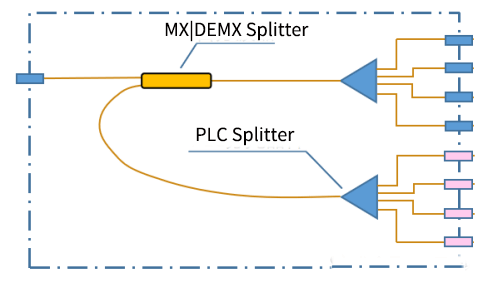
Fig.5 Components of the new optical splitter
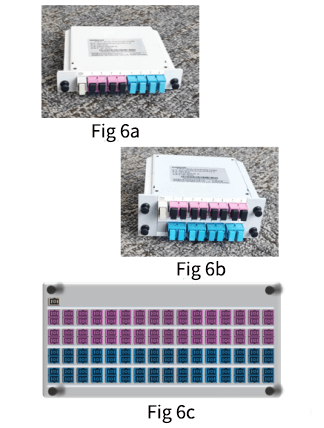
Fig. 6 shows the physical diagram of the new optical splitter, which mainly includes 4+4 type, 8+8 type and 64+64 type.
Fig. 6a for the 4 + 4 type, can access four GPON and four XG-PON users, GPON and XG-PON ports are differentiated by different colors.
Fig. 6b is 8+8 type, 4+4 type and 8+8 type are plug type optical splitter, suitable for installation in the splitter box.
Fig. 6c shows the 64+64 type, which is suitable for installation in ODF units. Hereinafter, the different models of capacity-multiplying optical splitters are collectively referred to as new optical splitters.
New Optical Splitter Capacity Multiplication Principle
The following is an example of the 4+4 type optical splitter to introduce the technical principle of the new optical splitter.
The input port of the new optical splitter is connected to the Combo port of the XG-PON device through the merge-side fiber, and the merge-side fiber contains four wavelengths, of which the lower rows are 1577 nm and 1490 nm, and the upper rows are 1310 nm and 1270 nm, as shown in Fig. 7.
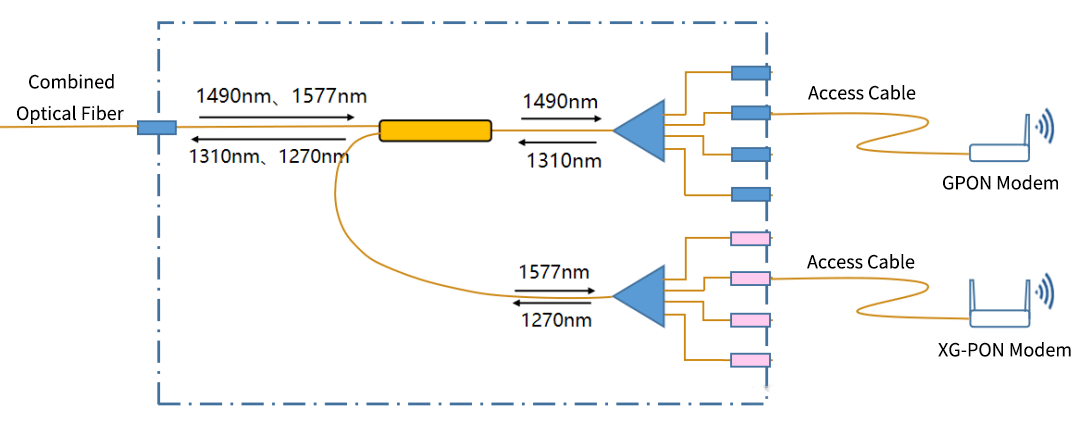
Fig. 7 New Optical Splitter Capacity Multiplication Principle
The above four wavelengths are divided into two paths after combining and splitting: one path is GPON path with down/uplink wavelengths of 1490nm/1310nm; the other path is XG-PON path with down/uplink wavelengths of 1577nm/1270nm.
The GPON path is divided into 4 branches after PLC splitter, corresponding to 4 GPON subscriber ports, each of which can be installed with one GPON subscriber through the home fiber optic cable, while the XG-PON path is divided into 4 branches after PLC splitter, corresponding to 4 XG-PON subscriber ports, each of which can be installed with one XG-PON subscriber through the home fiber optic cable.
In this way, the 4+4 capacity multiplier type optical splitter can accommodate four GPON users and four XG-PON users for a total of eight users, whereas an ordinary 1×4 optical splitter can only accommodate four users (GPON users or XG-PON users).
Compared with the ordinary 1 × 4 optical splitter, due to the addition of the combined splitter in the link, the insertion loss of the new optical splitter to increase by about 0.5dB, due to the attenuation of the ODN fiber optic link generally has more than 2.0dB of maintenance margins, the use of the new optical splitter does not affect the transmission index of the ODN link.
The use of the new optical splitter will double the maximum number of users accessing the Combo port.
Due to the existing Combo port bandwidth utilization (seconds) is generally very low, the increase in the number of users accessing the Combo port bandwidth utilization will increase significantly, but far from exceeding the access capacity of the Combo port, and can ensure that within a certain period of time to meet the needs of business development.
Concluding Remarks
In XG-PON network deployment, the use of the new optical splitter can at most double the number of Combo port, merge the side of the fiber optic access to the number of users, thus saving the Combo port and fiber optic cable investment, reducing the investment cost of network construction and improve the efficiency of network operation and maintenance later.